

Storefront signs in Georgetown typically cost $129–$4,000+ depending on type. Simple vinyl window lettering runs $129–$399, ACM panel signs run $249–$799, and illuminated channel letters run $1,500–$4,000+. At Tech Guys Print & Sign, simple signs are ready in 3–5 days; illuminated signs take 2–6 weeks including permits and installation.
If you’re opening or refreshing a shop, here’s the short version: start with what customers actually see — clean window lettering and one strong fascia sign beat an expensive illuminated setup with a weak design. Check with the Town of Halton Hills about sign permits before you order anything lit or structural; it’s the step most new businesses skip. The rest of this guide breaks down what each sign type costs, what drives the price, and where the money is (and isn’t) well spent.
Storefront Sign Prices in Georgetown (2026)
| Sign Type | Typical Cost | Turnaround |
|---|---|---|
| Vinyl lettering (door / window) | $129–$399 | 3–5 days |
| ACM panel sign, 2×4 ft | $249–$449 | 1–2 weeks |
| ACM panel sign, 4×8 ft | $449–$799 | 1–2 weeks |
| A-frame sidewalk sign | $149–$299 | 3–5 days |
| Illuminated lightbox cabinet | $899–$1,999 | 2–4 weeks |
| 3D channel letters | $1,500–$4,000+ | 3–6 weeks |
| Professional installation | $99–$299 | Scheduled |
Please note: all prices shown are estimates only, not confirmed prices. Final pricing may vary based on your device model, parts availability, and the extent of the issue. Contact us for a confirmed quote.
Why Do Sign Prices Vary So Much?
The range from $129 to $4,000+ looks wild until you see what’s behind it:
1. Materials. Cut vinyl lettering is just premium adhesive film — cheap material, quick install. ACM (aluminium composite) panels are rigid, weatherproof, and look sharp for a decade. Channel letters are individual fabricated metal letters with LED modules inside — essentially small pieces of engineering, priced accordingly.
2. Size. Sign pricing scales with area and complexity. Doubling a panel’s dimensions roughly triples the material and the mounting hardware needed.
3. Electrical and structural work. Anything illuminated needs power run to it, and anything heavy or projecting needs proper mounting. This is where permits, electricians, and installers enter the picture — and where the timeline stretches from days to weeks.
The Main Sign Types, Honestly Compared
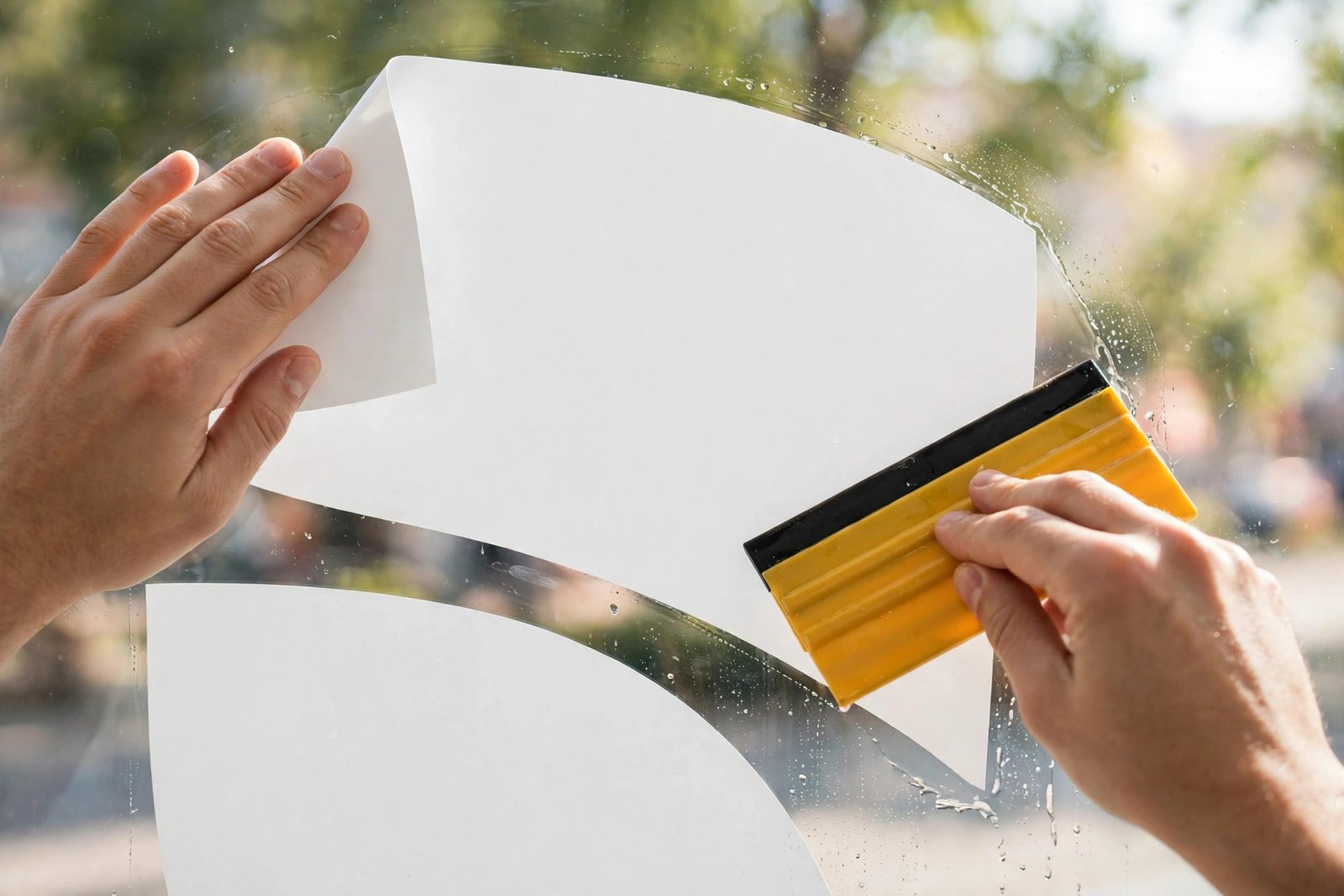
Vinyl window/door lettering ($129–$399) is the highest value in signage. Your hours, logo, and services right on the glass — visible 24/7, installed in an afternoon, and easy to update when details change. Every storefront should have this regardless of what else goes up.
ACM panel signs ($249–$799) are the standard fascia sign: a rigid printed panel mounted above the entrance or on the building face. Clean, professional, weatherproof for years. The 2×4 ft suits narrow storefronts; 4×8 ft suits wider facades. This is what most Georgetown main-street shops use, and for good reason.
A-frame sidewalk signs ($149–$299) are the daily special board — double-sided, portable, and the cheapest way to catch foot traffic. Get one with replaceable inserts so you’re not reprinting the whole sign every season.
Illuminated lightbox cabinets ($899–$1,999) are the glowing box signs you see on plazas. Great visibility at night, but the most expensive non-letter option once you add electrical. Worth it for businesses open evenings; overkill for a 9-to-5 office.
3D channel letters ($1,500–$4,000+) are the premium choice — individual lit letters mounted to the building. Stunning at night, unmistakable branding, and the longest lifespan. The price reflects fabrication, LEDs, permits, and professional installation. For flagship locations, nothing else compares.
Do You Need a Permit for a Storefront Sign?
Short answer: for most permanent exterior signs in Halton Hills, yes. Here’s the practical version:
- Window lettering and A-frames: generally no permit needed, but check sandwich-board rules for sidewalk placement — there are restrictions on where A-frames can sit.
- Fascia/panel signs: usually require a sign permit from the Town. The application needs drawings with dimensions, materials, and mounting method.
- Illuminated signs and channel letters: almost always need a permit, and may need an electrical permit too. Heritage districts (like parts of downtown Georgetown) have additional design rules.
The honest advice: call the Town’s building department before you order, not after. We’ve seen businesses pay for a beautiful sign they weren’t allowed to install. We help with permit-ready drawings for the signs we produce — ask when you quote.
Illuminated vs. Non-Illuminated: Is Lighting Worth It?
The question we hear most, answered straight:
Go illuminated if you’re open evenings, you’re on a road where drivers need to spot you after dark, or your storefront is poorly lit by streetlights. A dark storefront at 8pm in January is invisible — lighting pays for itself in walk-ins.
Skip it if you’re 9-to-5, you’re in a well-lit plaza or mall, or your budget is tight. A crisp non-illuminated panel sign in daylight does 90% of the job for 30% of the cost. You can always add gooseneck spotlights later — a $150 lighting add-on that gives most of the night visibility without the lightbox price.
The middle path: reflective vinyl lettering on windows. It catches headlights and streetlights at night for a fraction of illuminated-sign cost. Surprisingly effective, rarely suggested, worth asking about.
Installation: What’s Involved and What It Costs
Vinyl lettering we install ourselves in under an hour — it’s included in most quotes. Panel signs need proper mounting: standoffs, rails, or direct-fix to the facade, typically $99–$199 depending on size and wall type.
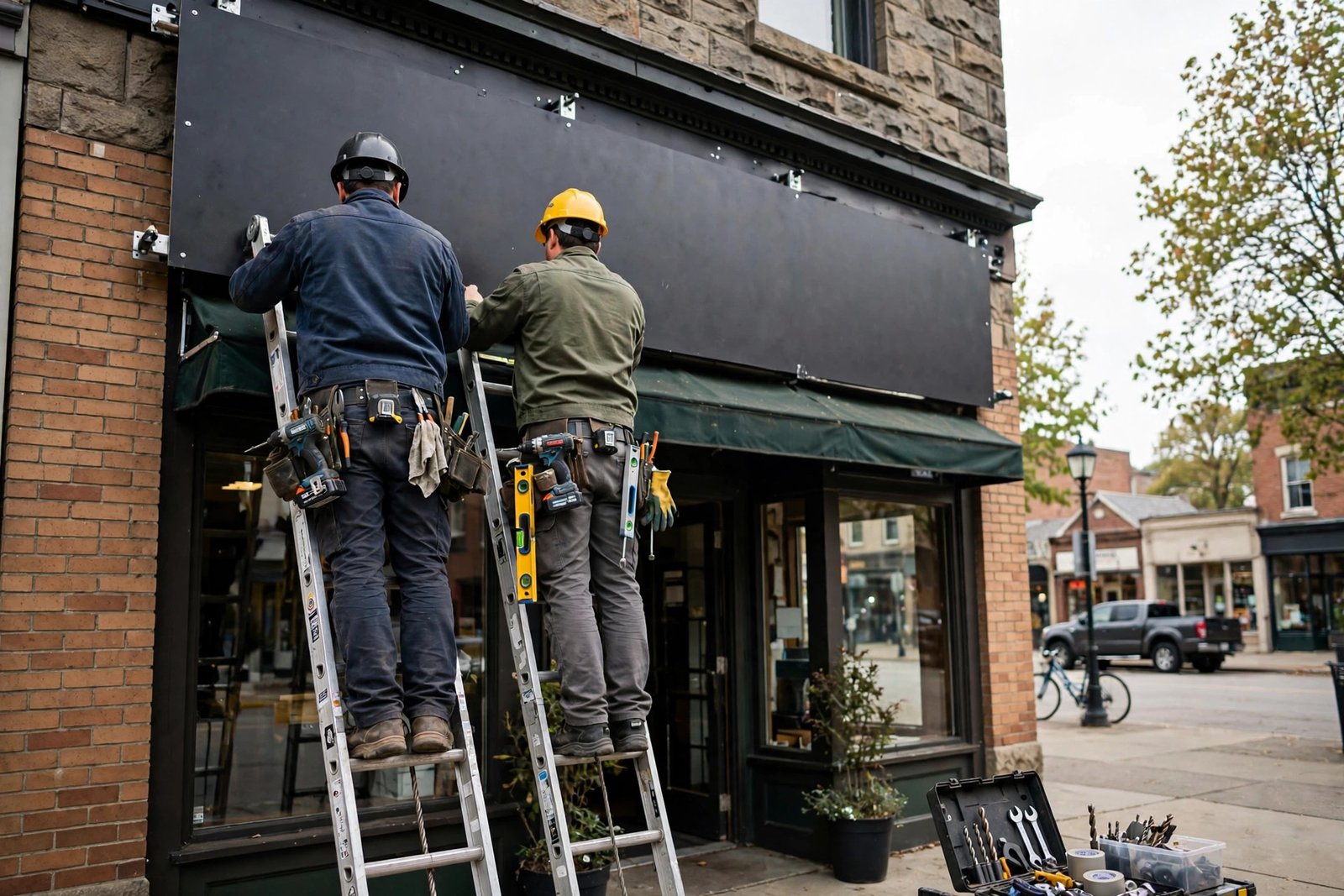
Illuminated signs and channel letters need a licensed installer and often an electrician — budget $199–$299 for the install plus any electrical work, which we coordinate. Anything projecting over a sidewalk or mounted high needs proper anchors, not screws and hope. This is not the place to DIY; a falling sign is a liability nightmare.
Timeline reality check: the sign itself might take a week, but permits can add 2–4 weeks before installation day. If you’re opening on a fixed date, start the sign process the day you sign the lease, not the week before opening.
When Is It NOT Worth Paying More?
- Channel letters for a second-floor office. Nobody reads 3D letters from the parking lot at that height and distance. A panel sign does the same job for a third of the price.
- Illumination in a bright plaza. If the plaza lighting already washes your facade, your lightbox is competing with free light. Spend it on a bigger, better-designed panel instead.
- Premium materials for a temporary location. Six-month pop-up? Vinyl banner and window lettering. Save the channel letters for the permanent home.
- Gold-plating a weak design. A $3,000 sign with a cluttered layout underperforms a $400 sign with a clean one. Fix the design first — it’s the cheapest upgrade in signage.
Frequently Asked Questions
How much does a basic storefront sign cost?
A vinyl window lettering package runs $129–$399 installed, and an ACM panel sign runs $249–$799 depending on size. For most small storefronts, window lettering plus one panel sign — roughly $400–$800 all-in — covers everything you need.
Do I need a permit for a sign in Georgetown?
For most permanent exterior signs, yes — the Town of Halton Hills requires sign permits, especially for illuminated signs, projecting signs, and anything in heritage areas. Window lettering and A-frames generally don’t need one. We provide permit-ready drawings for signs we produce.
How long do storefront signs last?
Quality vinyl lettering lasts 5–7 years; ACM panel signs last 7–10+ years; channel letters last 10+ years with occasional LED module replacement. Cheap materials fade in two summers — the price difference buys real longevity.
What’s the cheapest effective storefront sign?
Vinyl window lettering at $129–$399. It’s visible 24/7, installed in an afternoon, and covers your name, hours, and services. Every storefront should have it, whatever else goes up.
Can you match my existing branding?
Yes. Send us your logo and brand colours and we’ll match them — we colour-calibrate our printers and can match most brand palettes closely. If you only have a low-res logo, we can often rebuild it cleanly.
Do illuminated signs use a lot of electricity?
No — modern LED modules are very efficient. A typical lightbox costs a few dollars a month to run. The old fluorescent tubes were the power hogs; LEDs changed the math completely.
Can you remove my old sign?
Yes. We remove old panels, lettering, and cabinets as part of replacement jobs — old vinyl comes off with heat and adhesive remover, and we dispose of the waste. Removal is quoted with the new sign.
How far ahead should I order before opening?
Start the day you sign the lease. Simple signs take 1–2 weeks, but illuminated signs with permits can take 4–6 weeks total. The permit step is what catches people — it’s outside our control and outside yours, so build in buffer.