
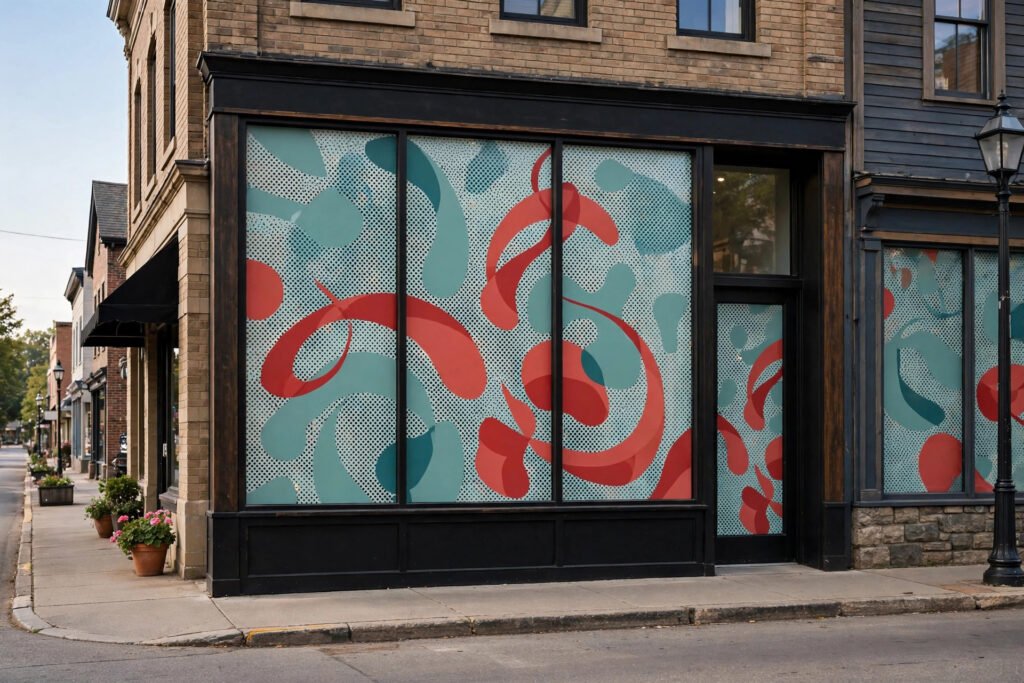
Window graphics for shops in Georgetown typically cost $49–$899 depending on coverage. A door lettering and hours decal runs $49–$129, a small window graphic runs $129–$229, and full-window coverage runs $8–$18 per square foot — a typical storefront lands at $299–$799. At Tech Guys Print & Sign, small jobs are done in 2–5 days; full-window wraps take 1–2 weeks.
If you’re dressing up a shop window, here’s the short version: start with the door — your logo, hours, and phone number in clean vinyl lettering is the highest-value signage there is. For big glass, perforated film gives you advertising outside and visibility inside. And measure twice: window film is cut to fit, and a quarter-inch matters. The rest of this guide breaks down pricing, the film types, and the design rules that make glass work for you.
Window Graphics & Decals: Cost Guide for Shops (2026)
| Window Graphic | Typical Cost | Turnaround |
|---|---|---|
| Door lettering + hours decal | $49–$129 | 2–3 days |
| Small window graphic (up to 6 sq ft) | $129–$229 | 3–5 days |
| Full-window vinyl (per sq ft) | $8–$15 / sq ft | 1–2 weeks |
| Perforated one-way vision film | $12–$18 / sq ft | 1–2 weeks |
| Frosted / etched-look privacy film | $10–$15 / sq ft | 1–2 weeks |
| Removal of old graphics | $49–$149 | Same visit |
Please note: all prices shown are estimates only, not confirmed prices. Final pricing may vary based on your device model, parts availability, and the extent of the issue. Contact us for a confirmed quote.
Why Do Window Graphic Prices Vary So Much?
Three things drive the cost:
1. Coverage area. This is the big one — pricing is per square foot, so a single door decal and a full storefront wrap live in different worlds. Measure your glass (height × width of each pane) before quoting; it takes two minutes and makes the quote exact.
2. Film type. Standard vinyl is the economical choice. Perforated one-way vision film costs more per foot but does two jobs at once. Frosted privacy film sits in the middle. Specialty films (metallic, colour-shift) are the premium tier.
3. Installation complexity. A flat door decal takes twenty minutes. A full window with mullions, curves, or second-storey glass takes hours and sometimes a lift. Difficult access is the hidden cost most online quotes miss — we quote after seeing (or seeing photos of) the actual windows.
The Main Types, Honestly Compared
Cut vinyl lettering ($49–$229) is crisp text and logos applied directly to the glass — hours, phone number, website, services list. Clean, professional, easy to update when details change. Every shop needs this as the baseline.
Full-colour window vinyl ($8–$15/sq ft) turns the whole window into an advertisement — product photos, promotions, branding that covers the glass edge to edge. Maximum impact; blocks the view in, which suits some businesses and not others.
Perforated one-way vision film ($12–$18/sq ft) is the clever one: from outside it’s a full-colour graphic, from inside you see out normally. Perfect for retail that wants advertising without losing daylight or sightlines. The holes are invisible beyond a few feet.
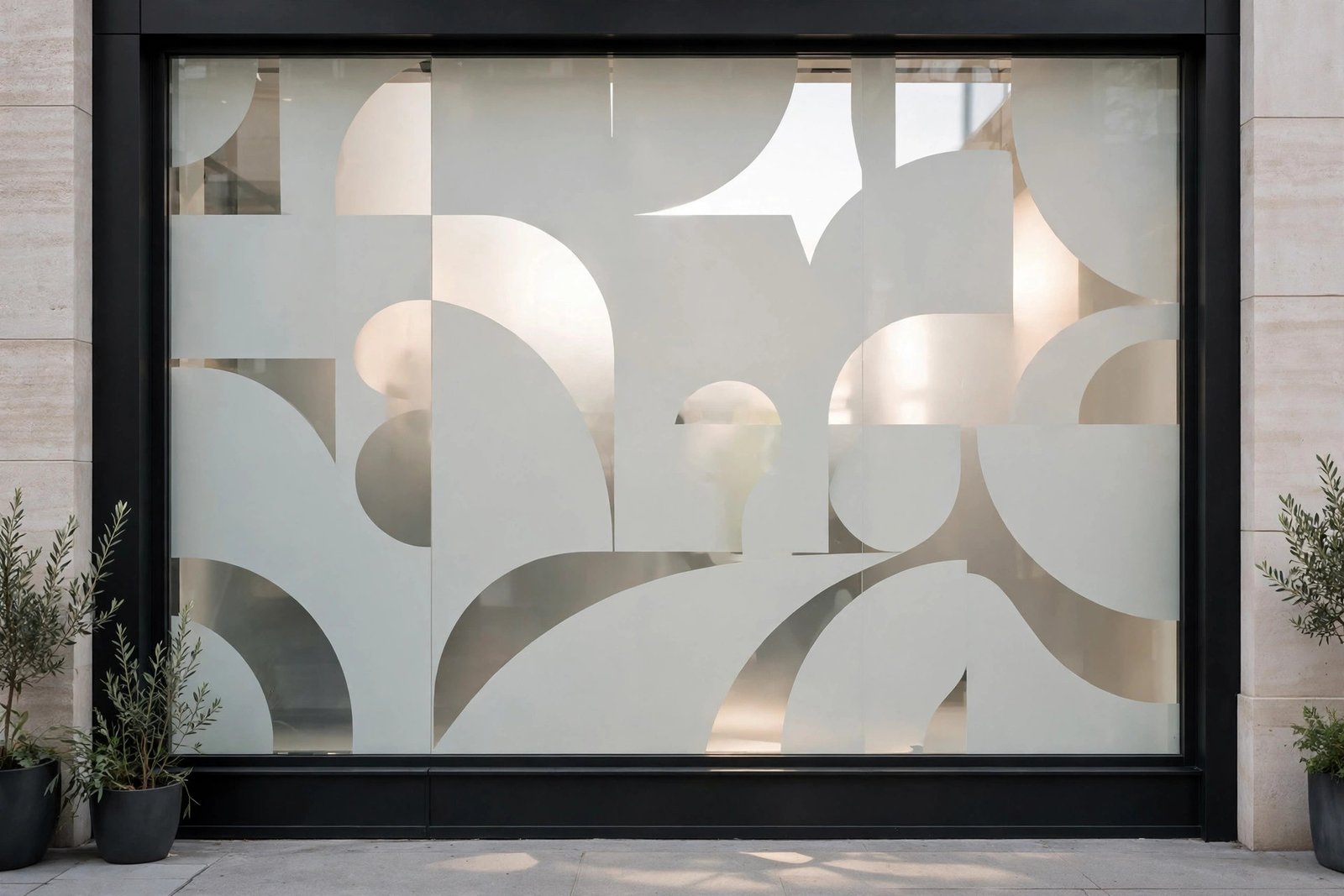
Frosted / etched-look film ($10–$15/sq ft) gives privacy with elegance — the classic choice for offices, clinics, and salons. Lets light through while obscuring the view. Add cut-out logos or text in the frosting for a high-end look at modest cost.
Perforated Film: See Out, They Can’t See In
This deserves its own section because it’s the most misunderstood — and most useful — window product:
- How it works: the film is printed on one side and perforated with tiny holes. From outside, your eye reads the printed surface. From inside, your eye focuses through the holes. It’s the same principle as a screen door.
- Best uses: retail storefronts that want big graphics without dark interiors, vehicle rear windows, and any glass where you want advertising outside and visibility inside.
- The trade-offs: fine text doesn’t render as crisply as on solid vinyl (design bold), and at night with interior lights on, the one-way effect reverses — outsiders can see in. Plan lighting accordingly.
- Lifespan: 2–3 years outdoors is typical; the perforations collect dirt faster than solid film. It’s a consumable, not a decade product — price it accordingly.
Design Rules for Glass
Windows are read from the sidewalk, often while walking. Design for it:
- Biggest thing = your offer, not your logo. “SALE — 50% OFF” in huge letters beats a giant logo with tiny sale text. Customers come for the offer.
- Eye level wins. Put the important message between 3 and 6 feet high — that’s where walking eyes go. Graphics near the floor get ignored; graphics near the ceiling get missed.
- Contrast is everything on glass. Glass is dark and reflective. Light, bold graphics on glass read far better than dark, subtle ones. White and yellow are your friends.
- Don’t block what sells. A clothing shop that covers its display window with opaque vinyl hides the merchandise. Use perforated film or keep graphics to the borders so the product still shows.
- Update seasonally. The same window graphic for three years becomes invisible to regulars. Budget for a refresh — even just the promotional panels — twice a year.
Installation and Removal: What to Expect
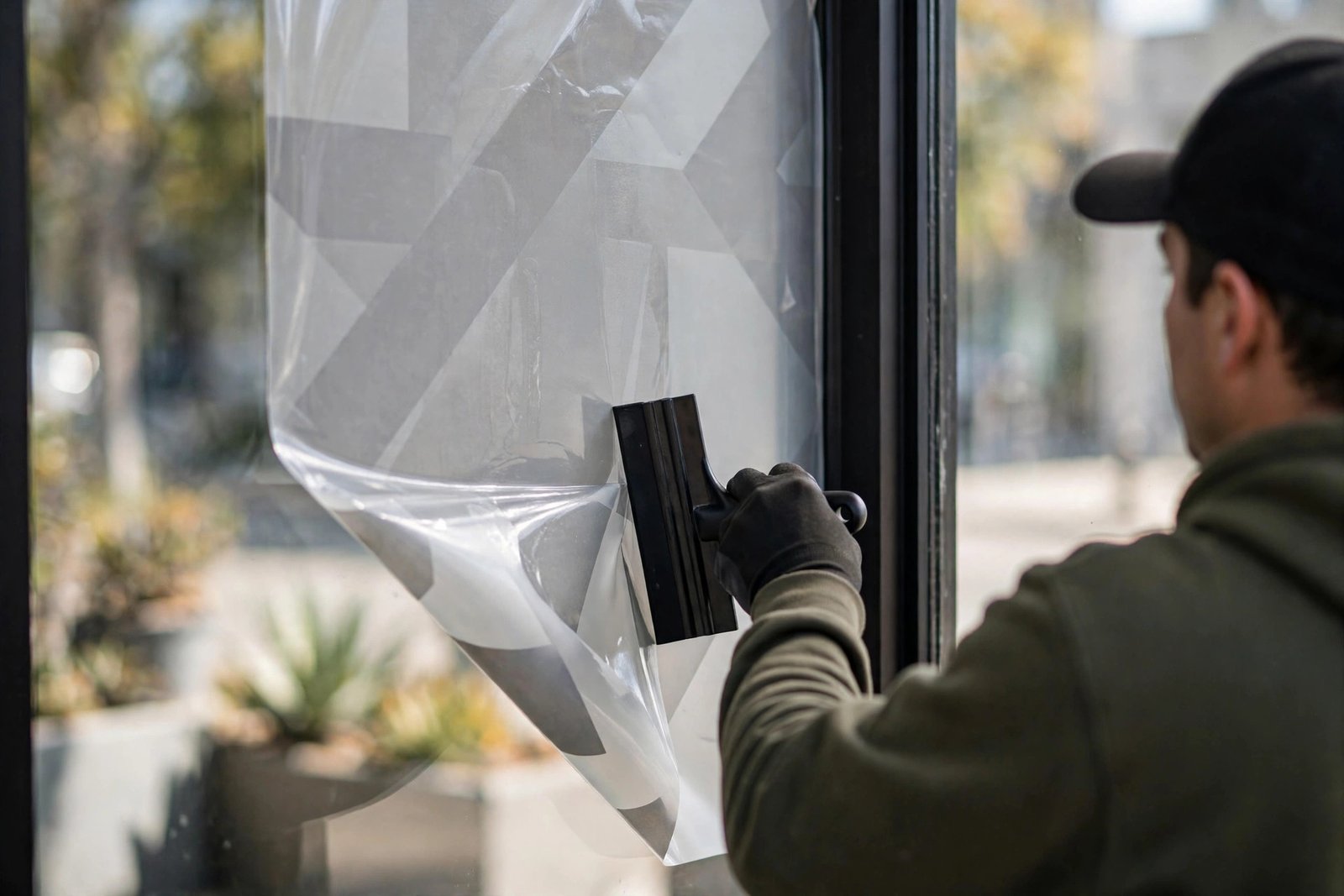
Professional installation is included in our per-square-foot pricing, and it’s worth it — window film is unforgiving of DIY bubbles and misalignment. We clean the glass, apply with water and squeegee, trim precisely to the frame, and heat-set the edges. A typical storefront takes half a day.
Removal matters too: cheap film baked on for five summers can take hours to scrape off and may need adhesive remover. Quality film (what we use) comes off cleanly. If you’ve got old graphics to replace, we remove and dispose of them — $49–$149 depending on area and condition, quoted upfront.
One honest note: we won’t install in freezing weather. Adhesive needs reasonable temperatures to bond — winter installs get scheduled for mild days or done with the heat on inside. A rushed cold-weather install peels by spring.
When Is It NOT Worth Paying More?
- Full coverage where perforated would do. If you want daylight and sightlines, solid vinyl at $8–$15/sq ft that you’ll hate is worse than perforated at $12–$18 that you’ll love. The “cheaper” option isn’t cheaper if you replace it.
- Premium film for a short promotion. A two-week sale doesn’t need 7-year film. Match the material lifespan to the campaign lifespan.
- Covering windows customers look through. Restaurants and cafés live on the visible interior — keep graphics to borders and doors, not the whole window.
- DIY to save the install fee. A $200 film ruined by bubbles costs more than the $0 install fee you saved (it’s included). This is not the place to learn.
Frequently Asked Questions
How much does it cost to put graphics on a shop window?
Door lettering starts at $49–$129. Full-window coverage runs $8–$18 per square foot depending on film type — a typical storefront lands at $299–$799 installed. Measure your glass (height × width per pane) for an exact quote.
What is perforated window film?
It’s a vinyl film printed on one side and perforated with tiny holes — from outside you see a full-colour graphic, from inside you see out normally. Ideal for retail that wants advertising without losing daylight. Runs $12–$18 per square foot installed.
Will window graphics damage the glass when removed?
No — quality film removes cleanly with heat, and we handle removal professionally. Cheap film left baking for years can be stubborn, which is another reason to use good material and replace on schedule.
How long do window graphics last?
Standard vinyl: 3–5 years. Perforated film: 2–3 years (the holes collect dirt). Frosted privacy film: 5–7 years. South-facing glass ages faster — UV is the enemy.
Can window graphics be seen at night?
With interior lights on, standard graphics show nicely. Note that perforated film’s one-way effect reverses at night — outsiders can see in when it’s brighter inside. For 24-hour impact, pair graphics with interior lighting.
Do I need a permit for window graphics?
Generally no — window graphics are considered interior signage in most municipalities, including Halton Hills. It’s one of the reasons they’re popular: big visual impact without the permit process that exterior signs need.
Can you print white ink on clear film?
Yes — white ink is essential for window graphics (it makes colours pop on dark glass and enables frosted effects). Not every shop has a white-ink printer; we do, so your colours stay vivid on glass.
How do I clean windows with graphics on them?
Normal glass cleaner and a soft cloth are fine — just avoid scrapers and abrasive pads on the film. Perforated film: wipe gently, don’t scrub the holes. With basic care, graphics clean just like glass.